



Far from being anomalous phenomena, the expansion of authoritarian forms of government, the normalization of war and the progressive loss of democratic guarantees are expressions of a profound transformation of the global capitalist order, which seeks to manage crises through force, fear and dispossession. Financialization, technological power and reactionary populisms combine to govern the social, racial and geopolitical fractures of a world where the old imperial center is crumbling.
The ecological crisis and the crisis of social reproduction reveal the magnitude of an offensive that puts at risk the material and affective foundations of life: the commodification of care, the precarization of work and the destruction of ecosystems are part of the same process of reconfiguration of power and decomposition of common life.
But where capital extends its dominion, spaces for reappropriation and collective creation also open up. On the margins of institutions, in territories and in the everyday fabric of life, practices emerge that challenge the logic of profit and rehearse other forms of existence.
To address these challenges, the XX Critical Economy Conference proposes three round tables that analyze the central dimensions of this capital offensive and the resistances that emerge against it: the crisis of social reproduction, energy transitions in dispute, and the authoritarian reconfiguration of global capitalism.
Feminism has generated fundamental analytical and political tools for developing an accurate diagnosis of how this neoliberal capitalist system, in alliance with other systems of domination (colonialist, heteropatriarchal), reproduces power relations and shapes an economic and sociopolitical scenario that serves its interests. Beyond conjunctural and structural analysis, feminisms create spaces for encounter, exchange, and resistance, capable of proposing and building alternatives to this biocidal model.
The dispossession of common goods, the expulsion of peoples from their territories, and the specific subjugation of women and sexually dissident groups are manifestations of this trend that endangers the social reproduction of the human species and our ability to survive on the planet.
Social reproduction is understood as the generation, maintenance, and continuity of life in homes, neighborhoods, communities, and towns, with special emphasis on the care we require because we are vulnerable, interdependent, and eco-dependent. To understand the reproduction of the workforce and the dynamics of capitalist accumulation, it is necessary to look at both the sphere of production and that of reproduction, as well as the relationship between the two. In turn, this allows us to think about policies that activate the solidarities of a heterogeneous and fragmented working class and to advance in the construction of a commonality with the capacity to defend life at risk.
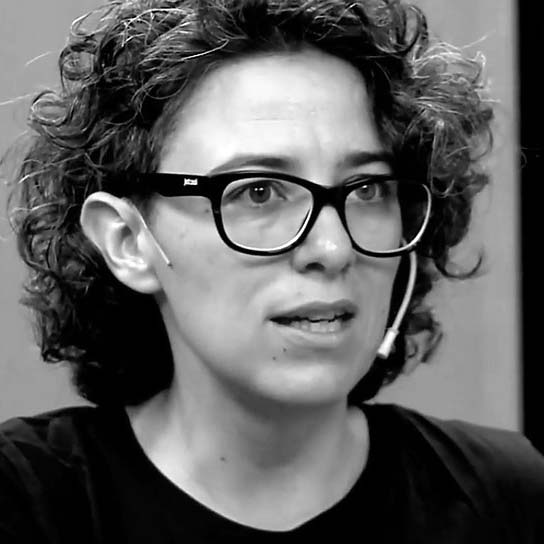
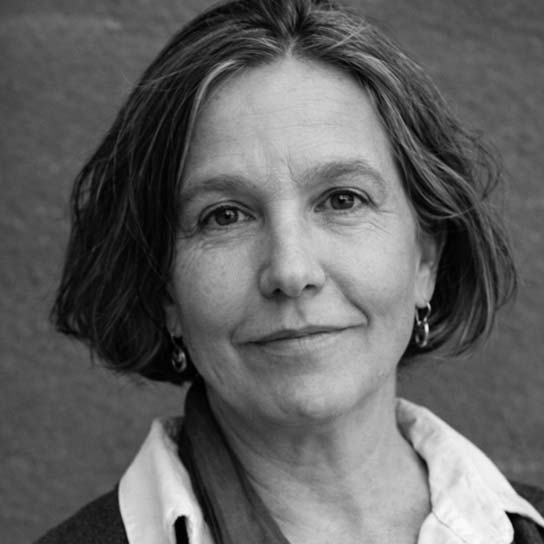
Speakers: To address these issues of social reproduction, care, and the struggles for life in the face of capital, we will hear from two key voices in Latin American feminist critical thinking and political economy: Raquel Gutiérrez and Flora Partenio, whose intellectual and political trajectories have been central to understanding the dynamics of dispossession, forms of community organization, and struggles for the sustainability of life in a context of civilizational crisis.
Since capitalism’s golden age, accumulation has rested on an unprecedented expansion of energy and material consumption. The spread of the automobile, extensive urbanisation, petrochemicals, agro-industry and global trade were not merely accompaniments to growth, but constitutive elements of an accumulation regime built on an abundant and cheap fossil base. Contemporary capitalism was thus configured on an increasingly extraction-intensive, accelerated-mobility and mass-resource-consumption social metabolism, with ever-deepening ecological, territorial and geopolitical consequences.
Remaining within the biophysical limits of the planet therefore demands far-reaching social, economic and political transformations. It is not enough to substitute one energy source for another, nor to place trust in technical efficiency or green innovation. Any serious horizon of ecosocial transformation implies reorganising the relationships between nature, capital, the State and power, as well as revisiting the material bases that sustain production and social reproduction. But this change does not unfold in a linear or harmonious fashion; rather, it takes place on terrain traversed by geopolitical disputes, historical inequalities and new forms of interstate and corporate competition. The expansion of renewables, large-scale energy projects, extractive enclaves or new strategic infrastructures may contribute to defossilisation, but may also reinforce dynamics of uneven development, deepening asymmetries between centres and peripheries, between sacrifice zones and consumption spaces, and between subordinate territories and command nodes. Added to this is an international context increasingly marked by the securitisation of energy, great-power rivalry and a war regime that subordinates climate policy to strategic and geoeconomic imperatives.
What kind of material and political transformation does a genuine exit from the fossil regime actually require? To what extent do current decarbonisation strategies challenge the logics of accumulation, dispossession and militarisation — or do they rather rearrange them under new forms? What role do uneven development, large-scale projects, territorial conflict and geopolitical competition play in this process? And what alternatives might emerge so that ecosocial transformation does not reproduce the inequalities of the present?
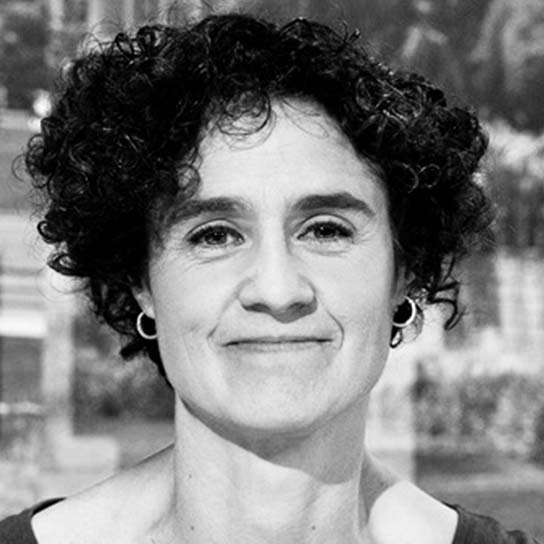
Speakers: To address these questions, we will be joined by Daniel Chavez and Erika González. Their respective trajectories will provide essential insights for thinking critically about the contradictions, conflicts and possibilities opened up in the current process of ecosocial reconfiguration.
The international economic order is being reconfigured. At the geopolitical level, a multipolar order is consolidated with new alliances and the crumbling of old agreements. Far from the neoliberal ‘pax mercatoria’, policies of aggression, distrust and isolation emerge: military race, trade protectionism, walls against migration and the rise of reactionary populisms with neo-fascist overtones.
Financialization, initially observed in high-income countries, is expanding geographically. Financial markets and institutional investors increasingly determine the rhythms of investment, distributive dynamics and forms of crisis in the periphery.
Alongside financial capital emerges an oligopolistic technological capital with evident structural power. As owner of the main opinion platforms and with infrastructure in strategic spheres (international payments, military intelligence), it acquires invaluable political influence. The relationship between capital and politics reflects an obscene complicity where both spheres become indistinguishable. The State is reconfigured: public welfare mechanisms are reduced while the subjection of regulatory institutions to the criteria of capital is strengthened.
Are we facing a new offensive of capital? Are these structural changes disguised as conjuncture or manifestations of the evolution of capitalism? Is the framework of ‘neoliberalism’ still useful? Is financialization at the base of these transformations? To what extent are reactionary and neo-fascist phenomena the result of the evolution of global capitalism?
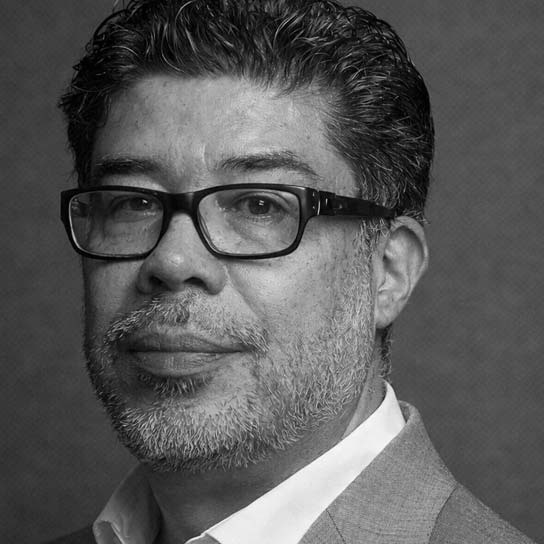
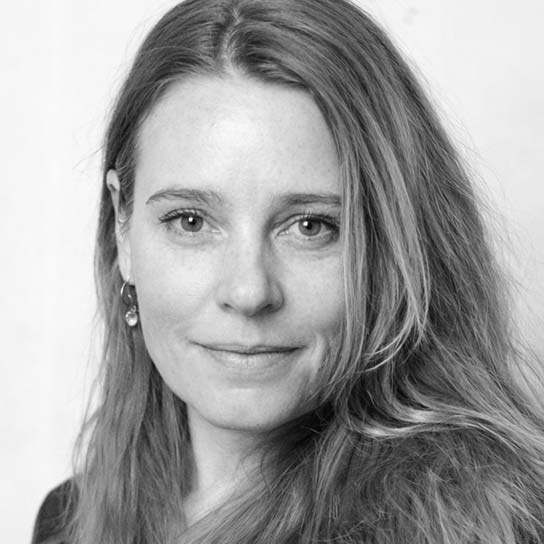
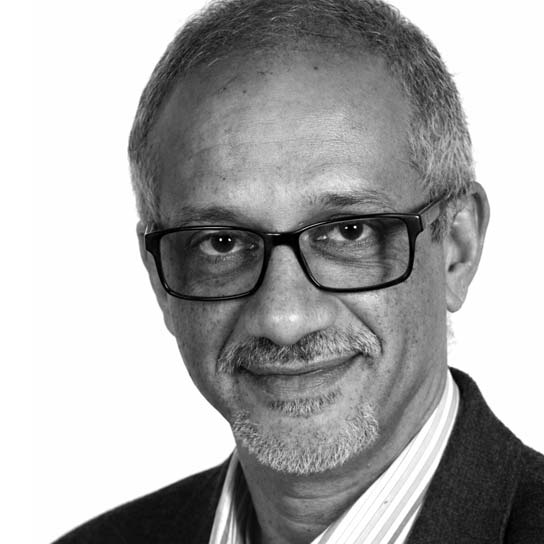
Speakers: To analyze these transformations of the global capitalist order, authoritarian drifts and new configurations of economic and political power, we bring together two international references of critical political economy: Angela Wigger and Alfredo Saad Filho. Wigger provides a historical materialist perspective on the transformations of the European competition regime and neoliberal consolidation in EU institutions, while Saad Filho offers a deep analysis of the implementation of neoliberalism in Latin America, financialization and structural inequalities in peripheral economies. Together they form an indispensable dialogue between the dynamics of the center and periphery of global capitalism.